
Short answer: the sound your car makes when you turn the key usually tells you what failed. If you hear rapid clicking it is like a battery issue. A single loud click points to the starter. A car that starts with a jump but dies soon after? That’s, probably, an alternator problem.
I'm Ben, and at Sparky's Automotive in Albuquerque, New Mexico, a no-start is one of the most common calls we get once the mornings turn cold. You don't need tools to narrow it down. Here's how to work it out from the driver's seat, and when it's time to call us.
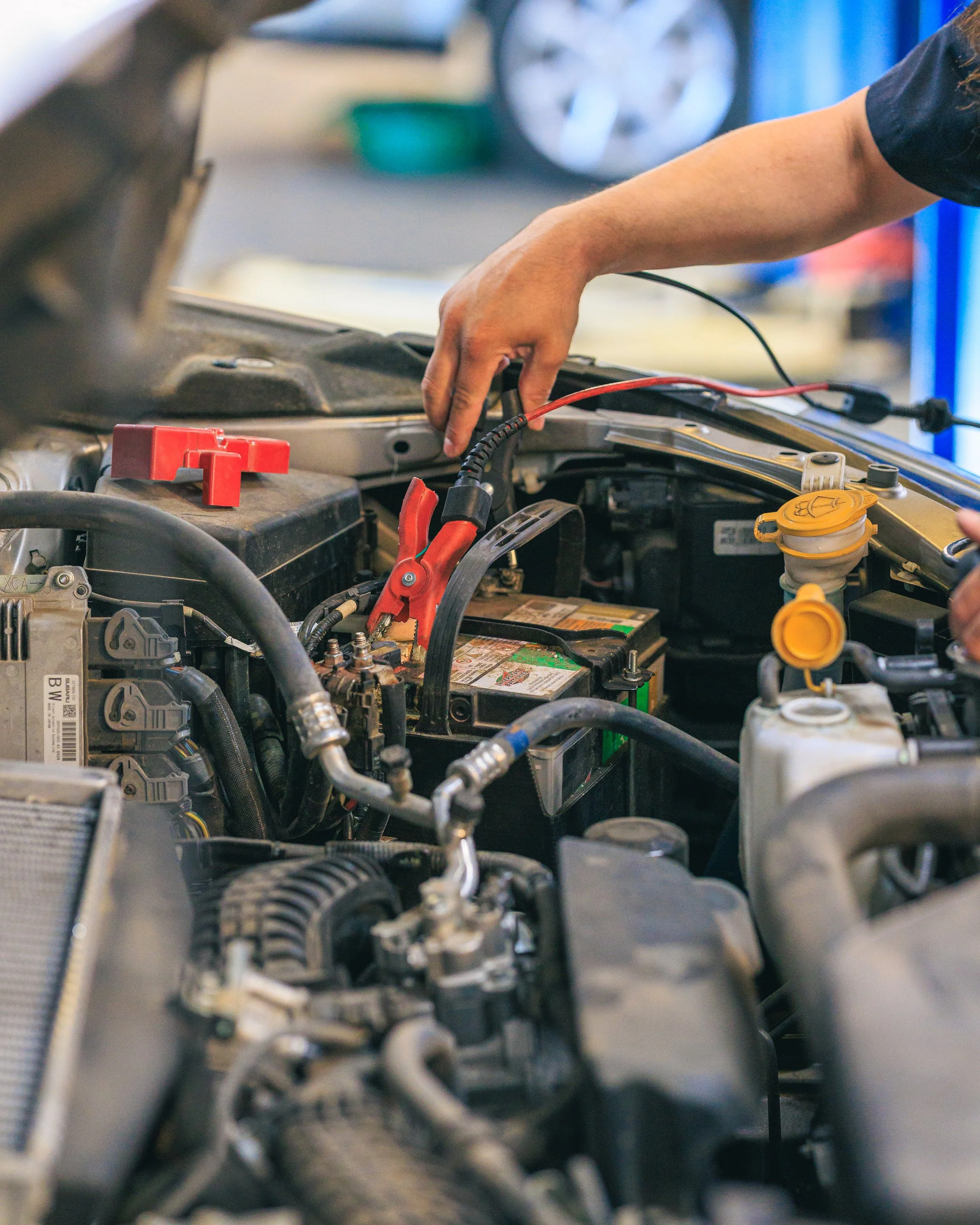
What does each sound tell me?
| What you notice | Most likely cause | What to do |
|---|---|---|
| Rapid clicking, dash lights dim or flicker | Weak or dead battery, or loose, corroded battery terminals | Try a jump start, then get the battery tested |
| One loud click, dash lights stay bright, engine doesn't turn | Starter or its electrical connection | Stop cranking it and call us |
| Engine turns over slowly, like it's struggling | Weak battery, especially in the cold | Jump start and test the battery |
| Engine cranks normally but never catches | Usually a fuel, ignition, or other engine-management issue | Call us for a diagnosis |
| Total silence, no lights at all | Fully dead battery or a bad connection at the terminals | Check the terminals, then try a jump |
| Starts with a jump, then dies again soon after | Possible alternator or charging system problem | Get it checked before you drive far |
A good rule of thumb: if the dash lights dim when you turn the key, think battery. If they stay bright and nothing happens, think starter. If the car runs fine on a jump and then quits again, think alternator.
What two tests can I do in the driveway?
The headlight test. Turn on the headlights, then try to start the car. If the lights go dim or go out, the battery is weak. If they stay bright and the engine still won't turn, the problem is more likely the starter or its connection.
The jump-start test. If a jump gets the car running but it won't restart after you shut it off, suspect a worn-out battery. If it dies again while you're driving or soon after the cables come off, suspect the alternator.
If you own a multimeter, a healthy battery reads about 12.6 volts at rest and about 13.5 to 14.5 volts with the engine running. A reading that stays low while the engine is running means the alternator isn't charging.
Why do batteries fail on the first cold morning?
Heat does the damage, and cold shows it. Albuquerque summers are hard on batteries, so many are already weakened by the fall, without anyone knowing. Cold weather then makes the engine harder to turn – just as the battery’s performance is at its worst. A battery will quietly aged all summer and give out on the first freezing morning.
If your battery is more than three years old, it's worth testing before the cold weather hits.
Is it safe to jump-start my car?
Usually, yes, with care. Don't jump a battery that is cracked, leaking, swollen or frozen. Check your owner's manual first, because many newer cars, and Toyota and Lexus hybrids in particular, have specific jump-start points.
Hybrids also have a small 12-volt battery that is separate from the big hybrid battery. When that small battery dies, the car won't start even though the hybrid battery is fine.
When should I call Sparky's?
Call us if the engine cranks but never starts, if you hear a single click and nothing else, if a jump doesn't help, or if the battery light came on while you were driving.
Not sure which one it is? That's what we're here for. Nobody should feel bad for not knowing this.
Quick answers
How long does a car battery last? Often three to five years, and less in hot climates. If yours is past three years, get it tested before winter.
Can a bad alternator kill a new battery? Yes. If the alternator isn't charging properly, even a new battery can run down and die again soon.
Is it okay to drive after a jump start? If you simply left the lights on, a good drive may be enough. If the battery died for no clear reason, get it tested.
Is clicking always the battery? Rapid clicking usually is. A single loud click is more often the starter.
Why does my car start fine some days and not others? That pattern usually means a weak battery, a loose or corroded terminal, or a starter that's starting to fail. It's worth finding out before it picks the worst day to stop all together!
